
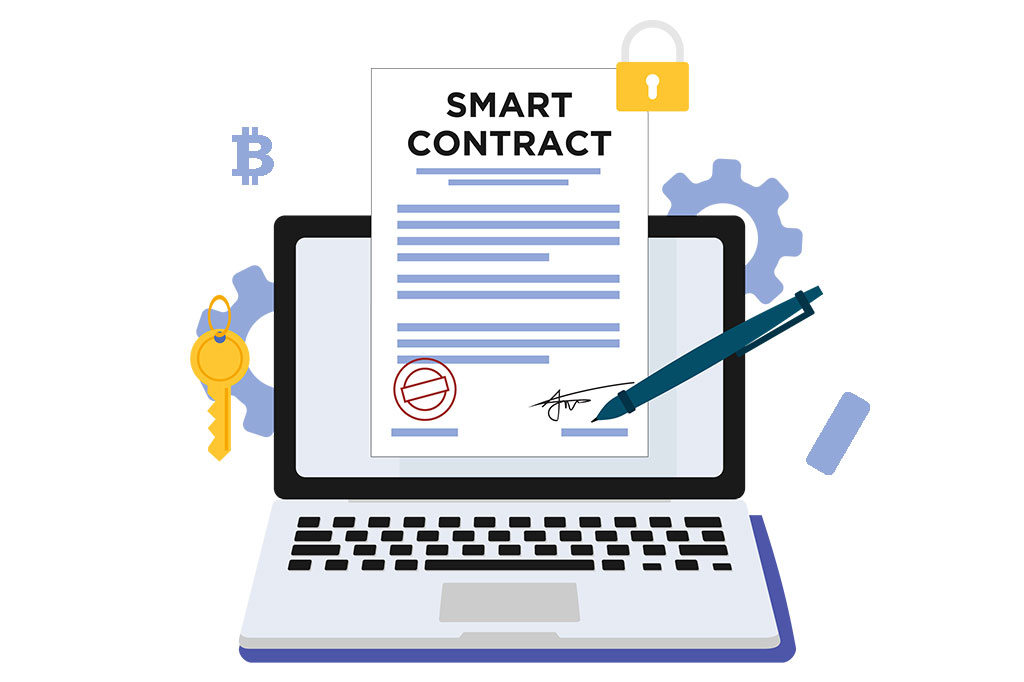
Smart contracts are tools. They are a part of blockchain technology. Smart contracts help people trust each other. They make digital agreements more efficient.
This guide will help you learn what smart contracts are. You will learn how smart contracts work. You will also learn why smart contracts are important in todays world.
Defination of Smart Contracts
A smart contract is like an agreement that can do things on its own. It runs on a blockchain. It does things when certain conditions are met.
In words smart contracts remove the need for a middleman.
For example of using a bank or a lawyer a smart contract can move money around when certain conditions are met.
Working of Smart Contracts
Smart contracts use code that is stored on a blockchain. Once this code is there it is hard to change.
Because smart contracts run on blockchain they are transparent. They are secure and hard to tamper with.
If you want to learn more about contracts you can read about them on Investopedia.
Important Features of Smart Contracts
Smart Contracts have some really important features that make them powerful which are as follows:
- Security is maintained through blockchain encryption.
- Immutability means the smart contract cannot be changed once it is there.
- Efficiency helps reduce time and cost by removing intermediaries.
These features make smart contracts really reliable for transactions.
Examples of Smart Contracts
Here is an example for better understanding of smart contracts.
Suppose you are buying something online. Of using a third party a smart contract can:
- Hold your money.
- Check if you got the product.
- Give the money to the seller automatically.
This all happens without anyone needing to do anything. This reduces risk. Increases trust in smart contracts.
Use Cases of Smart Contracts
Smart contracts are being used in many industries today.
- They are used in finance to power DeFi platforms for lending and borrowing.
- They are used in estate to automate agreements about property.
- They are used in supply chain to track goods and trigger payments.
- They are used in gaming to manage who owns assets and NFTs.
- They are used in insurance to automate claim processing.
Advantages of Smart Contracts
Smart Contracts have several benefits over traditional systems which are as follows:
- They remove the need for intermediaries.
- They reduce costs and time.
- They increase trust through transparency.
- They make sure agreements are executed accurately.
Challenges of Smart Contracts
Despite their benefits smart contracts also have some limitations.
- Coding errors can make them vulnerable.
- Once they are there they are hard to change.
- Different countries have laws about contracts.
- They require knowledge to develop and manage.
- Relationship between Smart Contracts and Ethereum
- Ethereum is the platform for contracts. It lets developers create applications using contracts.
These applications run without stopping or interfering. This makes them really reliable.You can learn more about Ethereums ecosystem and smart contract capabilities on Ethereum.org.
Future of Smart Contracts
Smart Contracts are going to play a big role in the future of digital systems.
They are the part of:
- Decentralized Finance (DeFi)
- Web3 applications
- Digital identity systems
- Automated business processes
Final Thoughts
As technology gets better smart contracts will become more secure. They will become more scalable and widely adopted. Understanding contracts is essential for anyone interested, in blockchain, cryptocurrency or the future of technology.
If you have heard of decentralized apps or DeFi then you know that smart contracts are the backbone of these things. For people who’re new to this smart contracts might sound complex.. They are actually pretty simple once you learn about contracts.
Also Check Types of Blockchain – Powerful Guide – 2026